The claim sounds exaggerated. Industry 4.0 hasn't even reached most factories yet, and already there are people saying it's been left behind. But that's exactly the point. While much of the industry is still debating how to connect machines and structure data, the frontier abroad has moved on. And it has moved to a place that has a name, has cases in production, and is changing what it means, in practice, to run a smart factory.
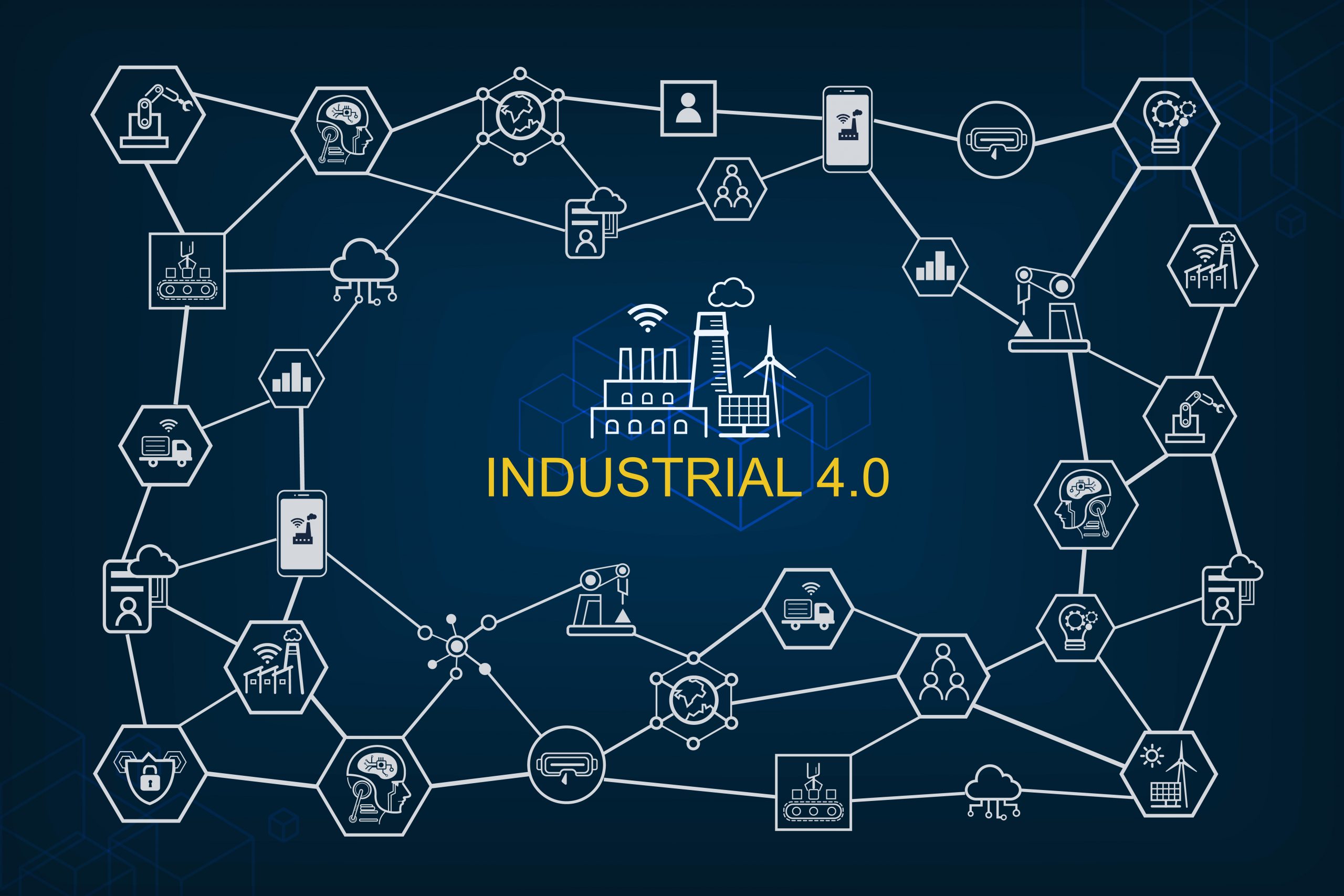
The Industry 4.0 we know solved an important problem: bringing the factory out of the dark. It connected machines, surfaced OEE in real time, automated downtime logging. But it stopped there, at the level of visibility. The next phase is about decision. And that's where Software Defined Manufacturing comes in.
McKinsey's numbers show what Industry 4.0 delivered: 30 to 50% reduction in downtime, 10 to 30% increase in throughput, and 15 to 30% improvement in productivity.
What Industry 4.0 delivered (and where it stopped)
It's worth starting by acknowledging what Industry 4.0 actually brought. In a plant that applied the concept well, it is now possible to see the status of every machine in real time, calculate OEE automatically, log downtime without relying on the operator writing it on paper, predict failures through predictive maintenance, and integrate the shop floor with ERP and production planning. All of this is real, it is in production in hundreds of factories, and it generates consistent ROI.
But notice the pattern. All of it is about making visible what was invisible, or about anticipating what was going to happen. At no point does the factory stop depending on a human to decide what to adjust, on which parameter, at which setpoint. The dashboard shows. The operator decides. The PLC executes. That model works, but it has a ceiling.
The ceiling of traditional Industry 4.0
The ceiling appears when you realize the factory generates data no human can process. A production line with 200 monitored variables, each read every second, across three shifts. In a single hour, that's millions of data points. No operator, however experienced, can balance those variables in real time to extract the best result.
McKinsey itself, in its report on post-hype Industry 4.0, shows that only 40% of companies achieve substantial progress — in part because 4.0 delivers visibility, but the decision remains a human bottleneck.
And there's more: the best combination of parameters to reduce energy is different from the best combination for quality, which is different from the best for productivity. The factory has goals that shift throughout the day, the shift, the batch. Traditional Industry 4.0 can't handle that. It shows what is happening, but it doesn't decide what to do.
The next step: Software Defined Manufacturing
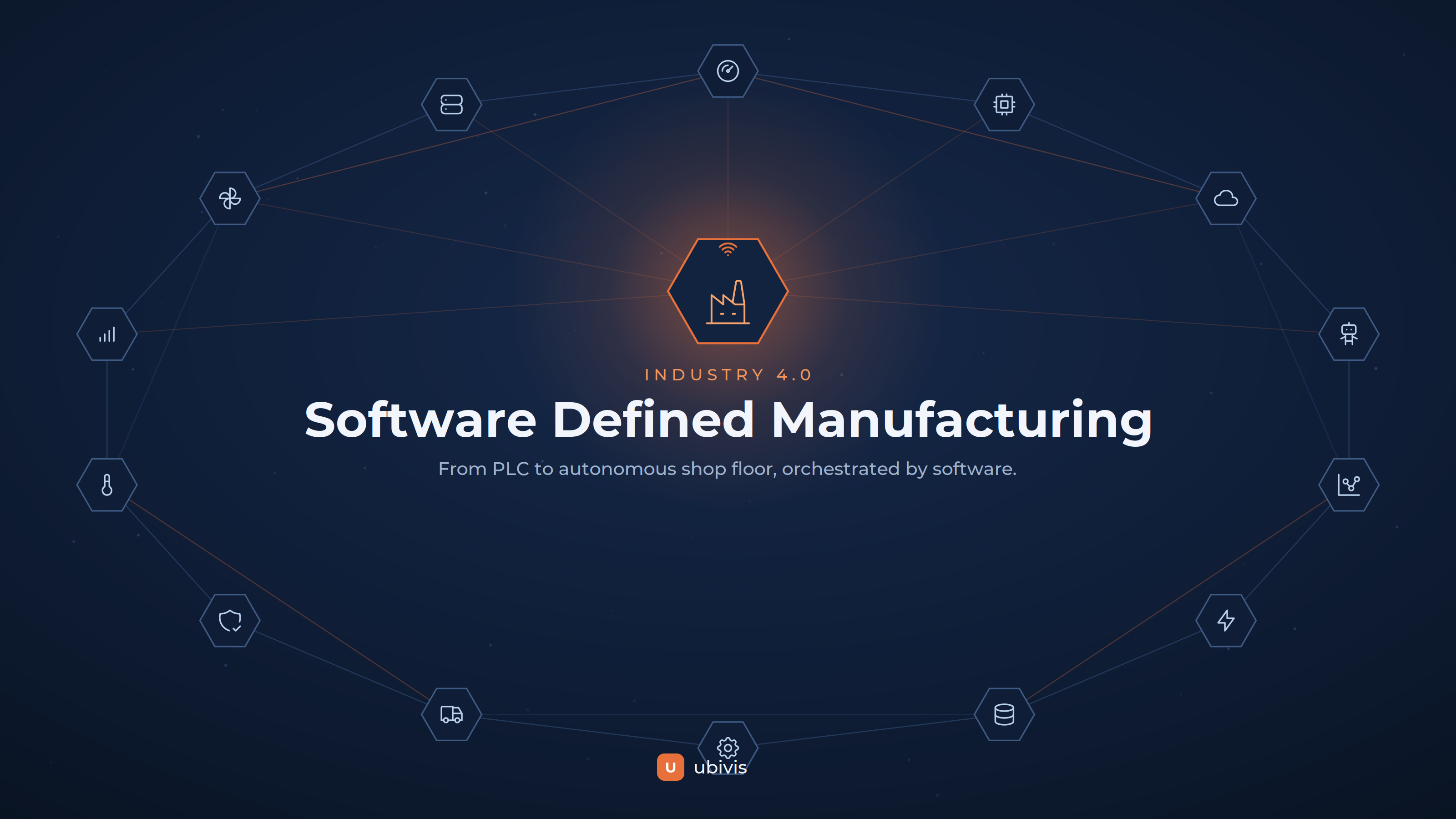
This is where the next phase comes in, one that is already in use by Fraunhofer, Deloitte, and ARC Advisory Group: Software Defined Manufacturing (SDM). The idea is to place a layer of artificial intelligence above the PLC, capable of analyzing all those variables in real time, calculating the best adjustments for the defined objective (energy, quality, productivity, ESG), and proposing or applying those adjustments directly.
It's not about replacing the operator. It's about giving them a capability no human has alone: evaluating dozens of variables simultaneously, balancing objectives that conflict with one another, adapting the operation to what the moment demands. Industry 4.0 showed the factory. SDM begins to optimize it on its own.
Why this matters for the industry
The common reaction is "I haven't even finished my Industry 4.0, how am I supposed to think about SDM?". The good news is that SDM doesn't require starting from scratch. It builds on the same foundation of IoT, structured data, and integration that Industry 4.0 is already putting in place. Whoever did the 4.0 homework well is one step away from SDM, not a decade.
The bad news is that this window doesn't stay open forever. The factories leading this movement globally are already reaping gains that shift the competitiveness curve. Waiting for 4.0 to "finish" before thinking about the next step is one way of guaranteeing that the next step is taken by someone else.
The question worth asking
Industry 4.0 didn't die. It matured, it became the foundation. What is happening now is the construction of the upper floor, where the factory stops merely showing what it does and begins to optimize what it does.
The interesting question is not whether your operation is "on Industry 4.0". It's another one: after all the data infrastructure you've built, how many real decisions are being made by software, and how many still depend on the most experienced operator remembering the right adjustment at the right time? The answer to that question says more about the future of your factory than any slide about an industrial revolution.