Imagine an operator who knows the factory in every detail. They know exactly which parameters to adjust to cut energy consumption on a night batch, which settings deliver maximum precision when the customer demands it, and how to extract the highest possible throughput when a deadline is tight. They weigh dozens of variables at once, balance conflicting goals, and make the perfect decision for the objective of the moment.
That operator exists — and it's made of software.
What Software Defined Manufacturing is
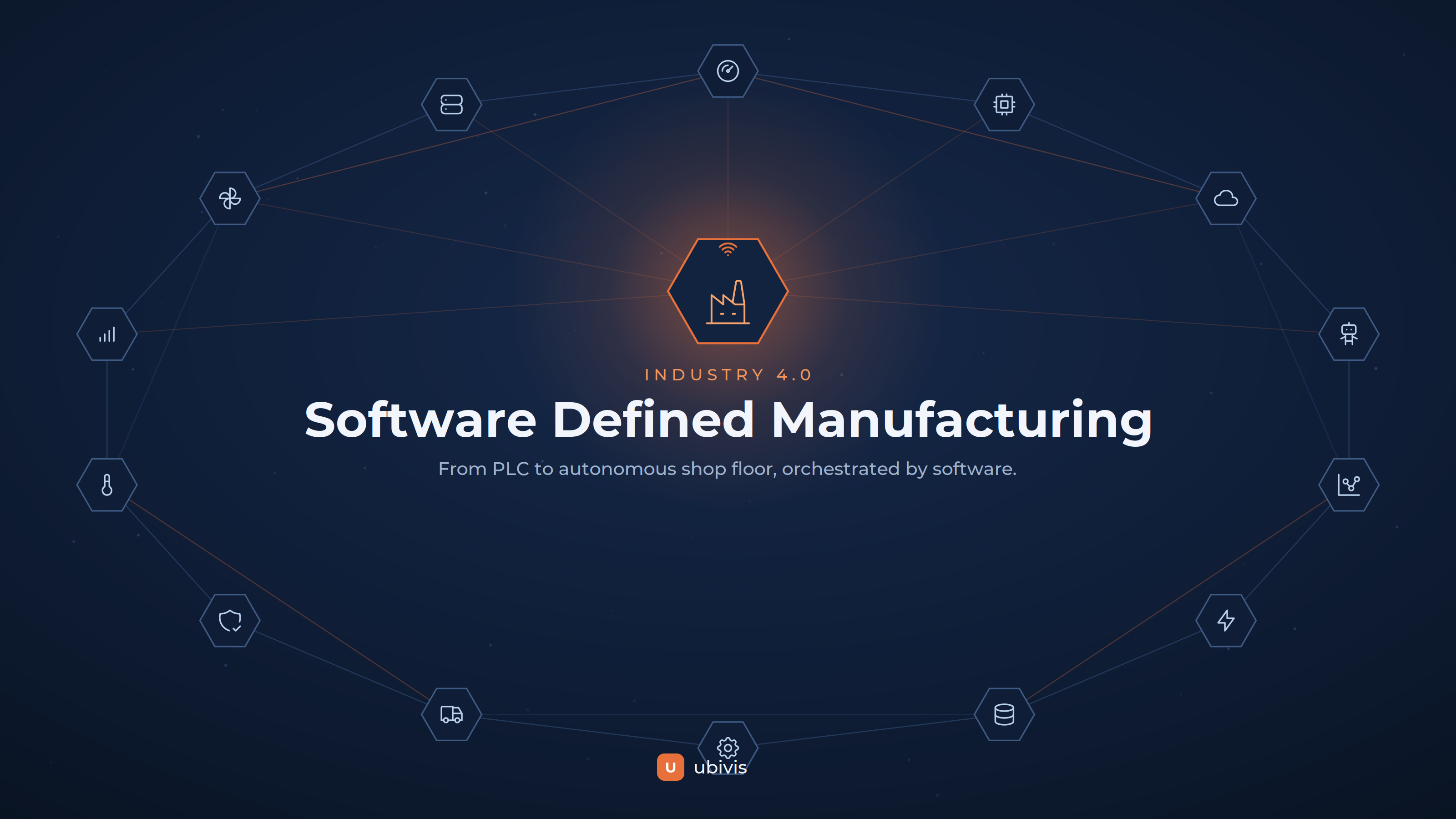
The term Software Defined Manufacturing (SDM) is born from the same logic that transformed telecommunications: separating decision intelligence from physical equipment. In practice, SDM is the application of artificial intelligence to create a layer of continuous optimization above the PLCs.
Machines are still controlled by the traditional physical equipment, but now there is software that talks to them in real time. It reads the data, computes optimizations, and returns adjusted setpoints, always respecting the engineering's safety limits. The PLC executes; SDM provides the intelligence behind every decision.
The three levels of autonomy: Read, Predict, Act
SDM is built on three sequential pillars, focused on adding intelligence to the operator, not replacing them.
Read — the foundation. This means developing automated systems for intelligent, real-time data collection, integrating IoT directly with PLCs and line equipment. Without reliable data extracted at the source, any AI layer is pure fantasy.
Predict — AI applied to reality. Using machine learning over the collected data, the system performs a dynamic assessment of risks and scenarios: predictive maintenance through electrical current analysis, anomaly detection, and identification of quality deviations before they happen. The software analyzes and suggests.
Act — the decision. The AI computes the optimal setpoints and proposes the adjustments directly on the operator's screen through a visual, no-code interface, allowing configuration and interaction without programming. The operator approves or rejects the suggestion. In more mature scenarios, the operation can even take on autonomy for specific, safe parameters.
The Ubivis difference: multiple digital twins, one scenario for each goal
This is where Ubivis's approach changes the game. Instead of relying on a single generic model trying to optimize everything at once, the UbGenius platform lets you create multiple digital twins for the same process. Each twin is trained for a distinct objective: one scenario focuses on minimum energy consumption, another on maximum quality, and a third on extreme productivity.
To make it concrete, picture an automotive plant operating with dozens of robotic arms on its assembly line, treated as critical equipment. With UbGenius, you apply a dynamic evaluation system with digital twins to that line. During a demand peak to hit a production target, the "maximum productivity" scenario kicks in, adjusting the PLC setpoints to speed up the robots' cycles safely.
But if the goal shifts to "efficiency" during a peak tariff window, the system's conductor switches the command: the energy scenario takes over and automatically smooths the robotic arms' accelerations, saving electricity without compromising weld or paint quality.
Why this matters now
Three vectors have aligned to make SDM an accessible reality. The first is technical: AI applied to industrial time series has reached maturity. The second is connectivity: protocols like OPC-UA, MQTT, and Modbus TCP have consolidated, making it possible to extract data from more than 70% of the existing industrial base without replacing a single machine.
The third is the market. The pressure has shifted: mass customization, short cycles, and strict ESG targets are now demanded. Recipe changes and quality optimizations are no longer week-long projects — they have become software decisions executed in hours.
The real transformation
SDM doesn't arrive to take the human out of the factory. It arrives to empower them with a skill impossible for our biology: instantly processing dozens of variables and balancing conflicting goals.
The most important question today isn't whether industry will adopt SDM — it already is. The urgent reflection is this: how much of your operation's efficiency and safety today depends solely on your most experienced operator remembering the right adjustment by heart? By turning tacit knowledge into software intelligence, the factory doesn't just optimize the present — it secures the future.